
Disappointment's Weight
This text is an attempt to understand the impact of trauma when it exceeds the event itself, turning into a prolonged sense of disappointment and disconnection from meaning. It is about songs that became collective memory, about hope that once felt close, and how it gradually turned into an open question about survival, loss, and what remains of us after all this devastation.
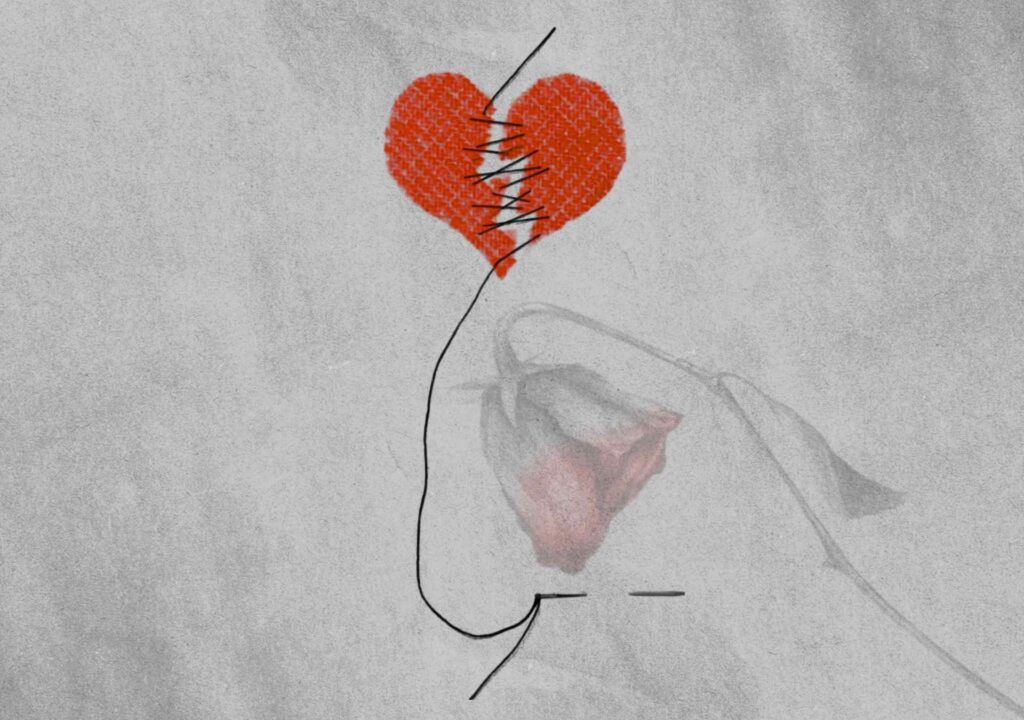
“Your eyes wander over you and grieve Afraid that this smile will never grow again in my heart”
— Sofia Zmerta
How do emotional songs, in the midst of tragedies, turn into collective elegies?
How does a lover become an entire city, and absence become death? And how does longing shift from a person to thousands of breaths and details we once believed would stay with us forever?
Our neighbor used to play Fairuz in the mornings, and Abdel Halim and Um Kulthum in the evenings. But in July, it felt as though he had lost every means of refusal except by playing Suwayda’s traditional songs on a loudspeaker all day long.
I used to envy the people of As-Suwayda six years ago, when they brought life back to us. They revived what I had begun to think were childhood illusions: chants, revolutionary songs we used to whisper after every gathering, crying as though they were our last dreams. I thought we had died before Sahat Al-Karama (Square of Dignity) rekindled hope in us.
I used to walk back from university carrying a small bag with light Arabic tobacco, rolling papers, and filters. I was still learning how to roll properly, and I could no longer afford imported cigarettes. I imagined the streets filling with people again — angry and hopeful, afraid and determined to live at the same time. Then I would sit frozen in front of my phone, watching the news, tears choking me, telling myself: maybe we are not defeated yet.
We used to send greetings to one another from the squares — secretly and openly — still wanting the same thing: to live with dignity.
During those years, friends in Suwayda would invite us — activists in other Syrian cities — to come to them for safety, after any attempt at activism in our areas had become nearly impossible under the suffocating security grip. We knew there was a place in Syria still able to say “no” without being immediately crushed. I never went, but I always felt that the fall of Suwayda would not be a local event, but a loss that touches everyone.
Then July 2025 arrived.
I followed the news as if watching a nightmare even Assad could not have produced. Dazed, trying not to lose my mind. It was not only the horror that shocked me, but the feeling of betrayal — as if we suddenly woke up to discover we no longer knew who we had once aligned ourselves with, or what remained of the slogans we had once shouted together in the streets.
The celebration of violence, and the gloating over all this destruction, was terrifying in itself.
Perhaps that is why I postponed dealing with the shock. Even now, I do not fully know what I feel, and that admission frightens me more than anything. I, who used to track every image and every video, found myself this time turning away. As if the mind itself decided to stop in order to protect what remained of it.
Months earlier, massacres had already struck the coast, like a clear warning bell. Then came Suwayda, as if confirming what we refused to believe. Key moments accumulated so quickly that any attempt at understanding or self-reflection felt meaningless. Everything seemed like a long process of destruction, with no visible shape of anything new to hold on to.
I call a friend there. We speak as if we live in two different worlds. I swallow the lump in my throat, try to steady my voice, ask for details, then move the phone away for a moment just to breathe. I return to listen, documenting information with cold detachment, then hang up and silence swallows me.
It cannot all be real.
I ask friends:
“Have you spoken to so-and-so?”
The answer is often:
“We’re too ashamed to call them.”
Embarrassment has become overwhelming. As if language itself has lost its ability to respond. No one knows how to comfort anyone, or how to explain this level of disappointment.
Even anger feels forbidden. We were deprived of protest, of shouting, of declaring solidarity — out of fear that any area might turn into another site of violence. All that remained were small symbols: writing, songs, tears… and a great deal of shame.
Sometimes I wish I could go down to our neighbor who resists through music, knock on his door and say: thank you. Can I sit with you for a while? Can we cry together?
But even crying was delayed. It did not come in July, but weeks later, then months later. And even now, I do not think I have fully processed the shock. Perhaps because some shocks do not arrive all at once, but slowly seep inward, becoming over time something like a long break of the heart.
And I resent nothing more than a broken heart. That we witness betrayal of this scale and remain powerless, and that those we once defended sometimes become part of the very ruin itself.
Perhaps the true revolutionary is not as strong as he appears. I think we were wrong to believe that strength means the ability to endlessly endure. The truly strong may be the one who can ignore everything and continue living a life that appears normal on the surface.
As for the revolutionary, he is often the one who cannot avoid aligning with what he believes in, with the will of the people, with the street as it sweeps him into open possibilities and raised fists. The one who allows himself to shake, to break, to be exhausted — and still remains attached to one idea: that we cannot survive alone.
“Return in a whisper and soothe my heart
Pray for you from a sip of despair you once gave me
How can I heal you when my wounds are your wounds
If I cry once, my tears precede your mourning… just speak to me.”