
Late Beginnings
This is not an exceptional story as much as it is an experience repeated in different forms by many people. It is about a path that does not begin with a clear opportunity, and about long attempts to redefine oneself after failure — and then continuing, despite the fact that the beginning was neither easy nor fair.
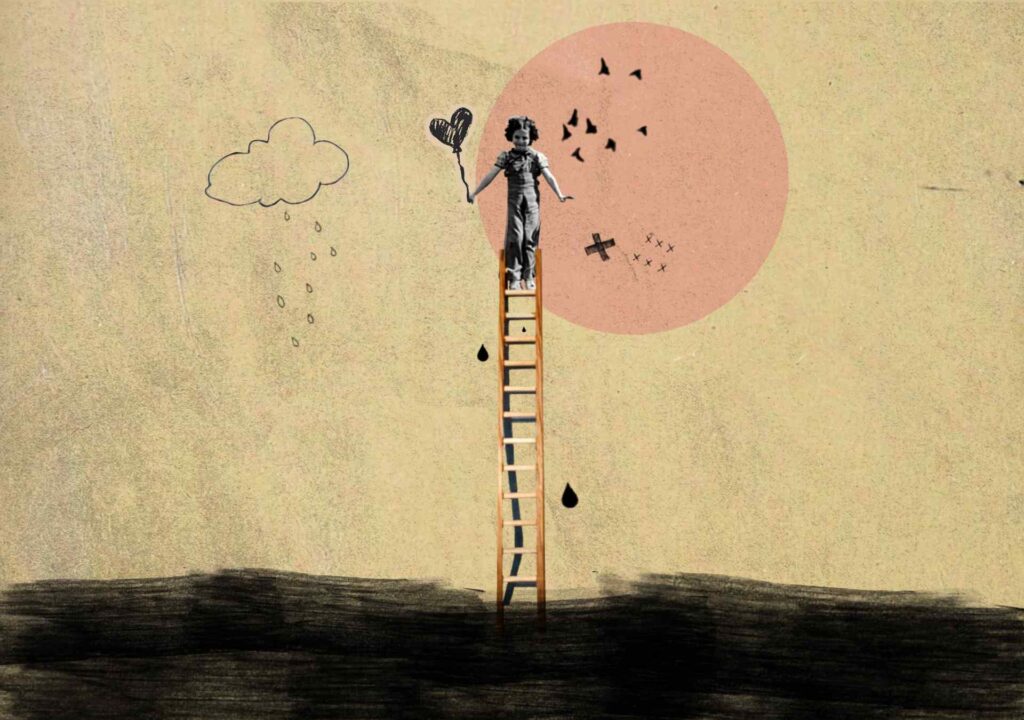
لكنني هذه المرة لم أتعامل مع الفشل باعتباره نهاية الطريق.»
— Areej Nasr
I was born in 2004 into a large Syrian family. I was the youngest child — my mother’s fourth daughter and my father’s fifth child. I came at a time when the family was already overwhelmed by responsibilities and difficult living conditions, to the point that my mother considered ending the pregnancy when she found out she was carrying me. After long discussions, she decided to keep me. And when I was born, I remained without a name for several days, until one of the neighbors suggested the name “Areej,” which eventually became mine.
I grew up feeling different from my siblings, not only in appearance but also in the way I was treated. My older sister had a childhood filled with attention and affection, and then came my brother — the only boy among the girls — who naturally occupied a large space of care and attention. As for me, because my age was close to his, I was often the one left at home whenever the others went out.
I did not attend kindergarten due to financial circumstances, so I entered school without any real preparation. The environment felt unfamiliar and overwhelming, while everyone else seemed far more prepared than I was. My siblings excelled academically, but I learned slowly and struggled to keep up with what was expected of me. I failed first grade, then fourth grade, and with every failure my confidence in myself decreased further.
No one paid real attention to my small details or my struggles at school. I went to school alone and returned home alone, without guidance or real support. Over time, school became associated in my mind more with helplessness than with anything else.
In seventh grade, I decided to stop studying altogether. After long discussions with my family, I stayed at home and gradually began taking on household responsibilities after my siblings got married. During that period, I knew clearly what I loved: art, beauty work, handicrafts, and cooking. But I did not know how any of these interests could become a real future.
My father owned a dairy business, and after staying at home, I began working with him.
Over time, I became an essential part of the daily work and learned the profession quickly. At first, it all seemed normal, but eventually it turned into a recurring inner question: Is this really the life I want?
Despite leaving school, the dream of university quietly stayed with me. The idea of a life broader than the limits of daily work and home never disappeared; it grew gradually until I finally decided to return to studying once again.
I saved enough money for books and enrolled in an institute, but returning was not easy. I worked with my father from early morning, receiving milk deliveries and completing the work, then quickly changed my clothes and went to class. During that period, I heard many comments doubting my ability to succeed, especially because of my academic history. But this time, I had a different motivation: to prove to myself first that I was capable of continuing.
During exam season, the pressure of work eased slightly, and I was finally able to focus on studying. I passed on my first attempt, and that experience became a real turning point in the way I saw myself. For the first time, I felt that past failure did not necessarily mean I was incapable.
Later, as work pressure on my father decreased, I started working outside the home. It was a phase filled with new experiences, accompanied by difficult health and psychological circumstances that delayed my studies for a while, but I did not stop. I enrolled in an English language institute, began saving money, and started thinking more seriously about my next steps.
A year later, I returned to studying once again and enrolled in a literary baccalaureate institute while continuing to work. It was an exhausting year, but it ended with success on my first attempt as well.
Then came university life with all its new challenges. I was accepted into a program outside my governorate and had to commute almost daily between Jaramana and As-Suwayda. The road was exhausting, stability was difficult, and during my first university year I was unable to move forward academically.
But this time, I did not treat failure as the end of the road.
Meanwhile, I decided to learn nail care and beauty work. I borrowed a small amount of money, bought basic tools, and started working independently from home. Over time, I managed to repay the debt and rely on myself to cover my study and living expenses.
What I want to say is that my experience was never about luck or an easy and guaranteed path. It was about someone who needed a long time to discover that where they begin does not necessarily determine where they can eventually arrive.
What I have achieved so far is not the end of the story, but the result of accumulated attempts — and the determination not to remain trapped within the image others drew for me at the beginning.