
From the Fire of the Road to the Prison of Home
In December 6, 2024, I was as close to nothingness as a person could be. The bus carrying me toward my destination suddenly found itself suspended in a limbo of death, trapped between the gunfire of warring sides — whatever names they wrapped themselves in to extract legitimacy from the barrel of a rifle. Bullets crossed above our heads with terrifying intensity, until the scene itself felt beyond human endurance.
The bus swayed in place, confused and incapable of moving forward or retreating. Fighters shouted, fired their weapons, and moved through the chaos as though no one else existed on this planet. As for us — the unarmed passengers, carrying nothing but our crashing fears — we sat silently asking ourselves: What do we do? How do we survive? Do we scream, or hide behind imaginary walls of safety?
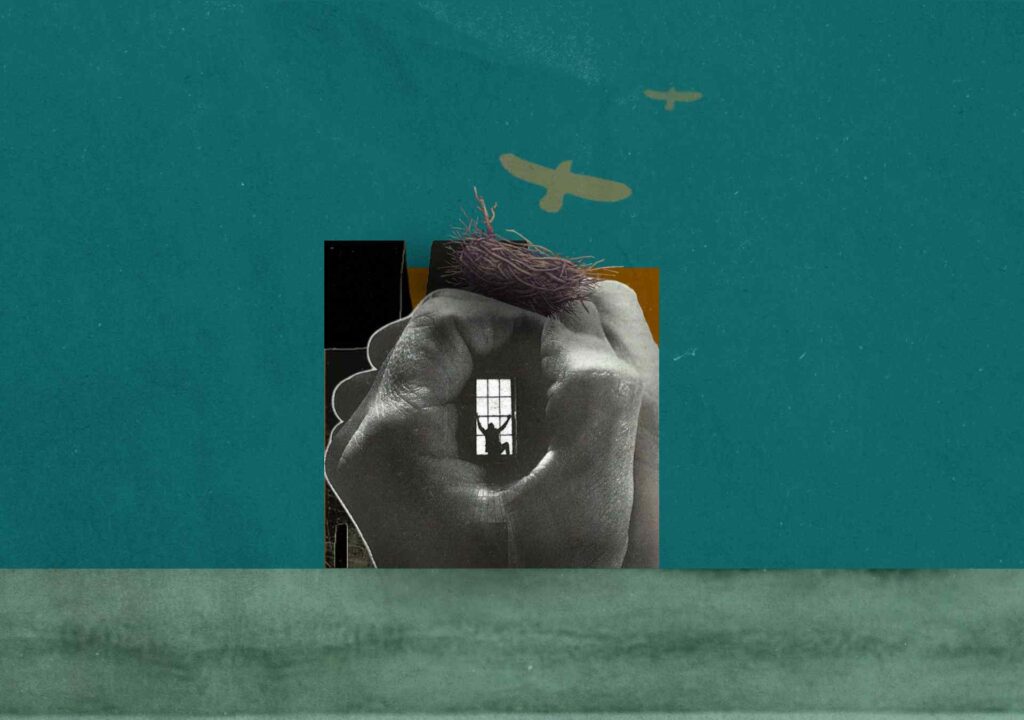
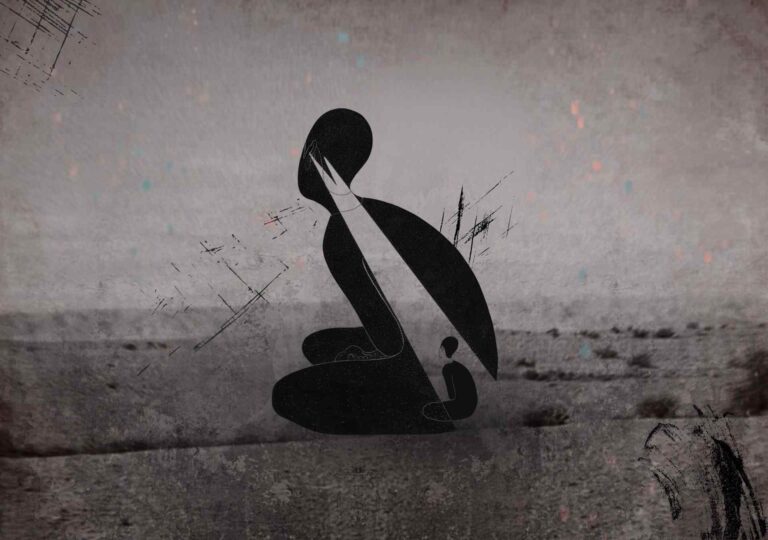
Fear has become part of our psychological structure, like a red light that never switches off.
— Hazem Salam
As for me, I simply looked at my hands. I had nothing except the need to grasp at some ritual that might shield me from collapse. I put on my headphones. Beneath the pressure of fear and the relentless sound of gunfire, I needed to cling to something that did not resemble death — a moment capable of restoring me from within. That was when I recalled Albert Camus in The Myth of Sisyphus:
“There is no fate that cannot be overcome by music.”.
All of this coincided with the end of my last work contract, during days marked by enormous transformations, as though the entire city were preparing to stop its own heartbeat. I was convinced that “new beginnings” had become impossible — not only because conditions had worsened, but because life itself had entered a long coma. I began waking every morning without purpose or direction, surviving only by counting endless hours in a city that no longer resembled anything except bitter waiting.
Although I was living in Damascus, I was not truly living. No work, no money, and no visible horizon ahead of me. I felt imprisoned inside a sealed room whose windows overlooked only closed roads. Even the air had become heavier, as though the city itself were tightening around us.
But the absurdity did not end there.
Several months later, in Jaramana on April 25, 2025, I woke to bursts of gunfire and screams tearing through the silence of the street. News spread rapidly about clashes between local groups and conflicting identities. In that moment, I felt that something inside the soul of the city had broken — something beyond repair. I decided to save myself. I did not know exactly where I was going, but I knew remaining where I was had ceased to be an option.
I rushed outside and stood at the first side street, raising my hand to stop a taxi. The daylight was pale, watching the scene with unsettling silence. A yellow car stopped, its side window partially shattered, driven by a man in his thirties. He did not even look at me. He simply said in a sharp tone: “Get in quickly. There’s no time left.”
I collapsed into the back seat, my body rigid as though I were sitting on broken glass. At first glance, I noticed a military ammunition pouch stuffed with bullets, a weapon resting beside the driver, and a metal box suggesting every imaginable danger.
My hands trembled. I stared at the weapon as though I were watching a sleeping beast that any sudden movement might awaken. I thought about asking him to stop, about running away, but my legs felt unbearably heavy. The driver turned toward me with a strange smile and said,
“There’s more in the trunk.”.
I remained motionless. I only looked out the window, trying to calm my fear while my heart pounded violently. I was exhausted; I had not slept for more than twenty-four hours, and my eyes had dried from anxiety.
Later, we were stopped by a local checkpoint. One of the men approached the window and said harshly: “No one is allowed to leave. Whatever happens to us happens to you too.” Another added: “Your presence here protects us. Enough people have already fled.”
They spoke as though we were human shields, as though our staying guaranteed their protection rather than our own. I looked at the speaker’s face, unsure whether he fully understood the meaning of his words. Was he afraid? Did he need us as emotional reassurance against his own loneliness? This young man had been left alone, and he feared abandonment. And now he wanted to seek protection through me — while I myself was paralyzed with fear? I swallowed my fear and remained silent until we crossed into a quieter street.
I stepped out of the car in silence, feeling the ground sway beneath my feet. In the following days, I stayed inside the house, following the news and trying to comprehend the explosion unfolding around us. External powers and international interests were manipulating our fate, while Syria dissolved further into social fragmentation. Leaving the house became a nightmare. We feared “the other,” who feared us in return, and human relationships became trapped inside suspicion.
In this context, when Michel Foucault wrote in Discipline and Punish that systems of control no longer exist only through prisons but through everyday surveillance and the small details that disturb awareness and besiege freedom, he seemed to describe exactly this reality. Living within our current condition is a severe psychological experience — one that fragments identity and dissolves any sense of safety. It is not merely a conflict between regimes and factions, but a homeland tearing itself apart through a politics built on domination and fear.
As Galal Amin once wrote: “The most dangerous thing about authoritarianism is that it changes people themselves, making them more willing to accept violence and defeat.”.
We have become accustomed to watching society militarize in an instant. We now recognize the pattern of sudden transformation whenever everything submits to the will of gunfire. In our country, the only thing that spreads faster than bread is the possibility of death. Weapons are everywhere, and hands resting on triggers wait for us at every corner.
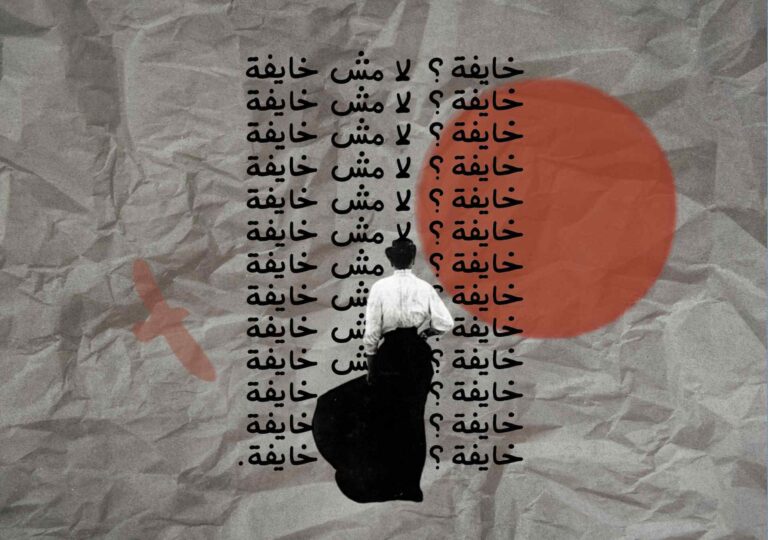
Sometimes, in a kind of denial, we say: “Seeing weapons has become normal.” But the truth is that we never truly became accustomed to them. We only became accustomed to their presence, while still trembling at the thought of their use. Fear has become part of our psychological structure, like a red light that never switches off.
Even the family home became a closed circle of anxiety. No official siege surrounded it, yet the real siege lived inside the walls themselves. Strict instructions, constant caution about speaking, even caution about appearing relaxed — all of it made me feel as though I lived inside an emotional prison disguised by clean blankets and cups of tea.
Even love itself had changed shape. My family’s fear for me no longer felt like tenderness surrounding me, but like a burden — a heavy blanket thrown over a soaked body, suffocating rather than warming it. Their constant demands that I “be careful” made me responsible for protecting myself, as though I were a lone guard in an unequal battle.
Even my body no longer felt like my own. I lost the ability to walk freely without sensing invisible eyes watching me. My steps became brief and tense, while my eyes instinctively searched every corner in fear.
And so I found myself besieged — not by walls, but by fear itself. Besieged by anxiety, and by the exhausting duty of defending my own existence against everything: conflicts, streets, and even the hearts closest to me that loved me so fearfully they nearly suffocated me.