The Road to University No Longer Feels Like a Road
In the aftermath of the events of July 14, 2025, in Suwayda, and the deadly violence against civilians reported in local testimonies and international accounts, that moment became a deep human wound that extended far beyond the security incident itself. Its impact reached into the everyday lives of people, especially young people and students. The loss was not merely a temporary disruption, but a heavy reality that reshaped people’s sense of safety and affected some of the most basic and fundamental rights: the right to life, movement, and education.
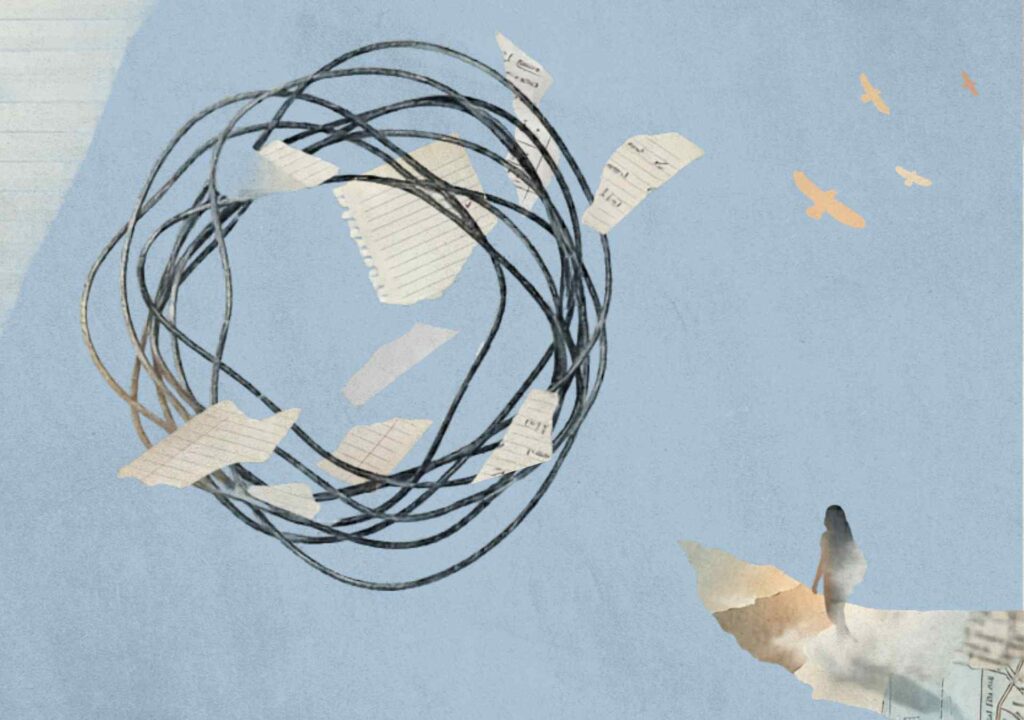
"Mothers now wait for a call of safe arrival — more than they ever waited for exam results."
— Mana
Among the sectors most deeply affected was higher education. Students from As-Suwayda, who largely depend on attending universities outside their governorate in places like Damascus, Homs, and Latakia, suddenly found themselves facing a reality far more complicated than academic interruption. Reaching university was no longer a normal daily step, but something tied to fear, uncertainty, and anxiety about the road itself, amid worsening instability and growing social and security tensions along routes between governorates.
Students no longer think only about lectures, but about the journey itself. Some mothers now wait for the “I arrived safely” phone call more anxiously than they wait for exam results. Many students leave home carrying a quiet feeling that returning is no longer guaranteed. Even university bags, once symbols of an ordinary day beginning, are sometimes left by the door for hours, waiting for a decision to travel — or to stay back out of fear of the road.
Within this context, testimonies and circulating fears also emerged regarding incidents of tension, harassment, and individual or collective assaults in certain public spaces and during travel, often viewed through the lens of social or sectarian identity within the broader conflict. Although these incidents vary in terms of documentation and verification, their psychological impact has been clear and profound. They have reinforced a widespread sense of insecurity that directly affects students and their families, making the decision to pursue higher education one burdened with fear and hesitation.
This experience is no longer simply an “educational setback.” It has become a deeply human condition in which students live through an exhausting internal struggle between the desire to continue their academic dreams and the very real fear of leaving home in an unstable environment. As scenes of violence continue to linger in collective memory, the road to university no longer symbolizes knowledge and hope, but rather a daily space of anxiety shadowed by uncertainty.
And yet, education has not disappeared entirely. Instead, it has changed in form and limitation. Individual and collective attempts to continue learning through alternative means have emerged — including self-education online, informal study, and acquiring skills outside the traditional academic framework. Though modest, these efforts reflect a quiet determination not to surrender completely, and to keep the idea of learning alive even under the harshest conditions.
Over time, fear itself has become disconnected from the events alone, and more tied to what those events left behind in students’ everyday consciousness. The road that once represented movement toward the future now carries a constant sense of insecurity, as though education itself has become something that requires survival.
At the same time, this reality carries deep psychological and social consequences for an entire generation caught between ambition and fear — between the desire to build a normal future and a reality that forces them to adapt to exception rather than normalcy. Education here is no longer simply an academic path, but a human space conditioned by the ability to endure.
What happened after July 14, 2025, did not directly close university doors, but it burdened the road leading to them with fear and uncertainty, turning access to education into a daily challenge that exceeds individual capacity. This kind of invisible interruption is perhaps the most dangerous, because it silently reshapes the future of an entire generation without leaving behind an easily measurable trace.
Despite everything, many students continue trying to move forward, even through incomplete or exhausting ways. For an entire generation, education is no longer merely about studying or earning a degree, but about holding on to a sense of normal life amid so much devastation. Perhaps this is why defending students’ right to education today feels like defending the future itself — and defending the belief that fear should not determine what life looks like next.