
How Do States Erode from Within?
Freedom every state that collapses is defeated militarily, and major crises do not always begin at the borders or through foreign intervention. In many cases, erosion begins from within — gradually and almost invisibly at first — through the transformation of relationships between people themselves, and the weakening of shared belonging in favor of division, fear, and categorization.
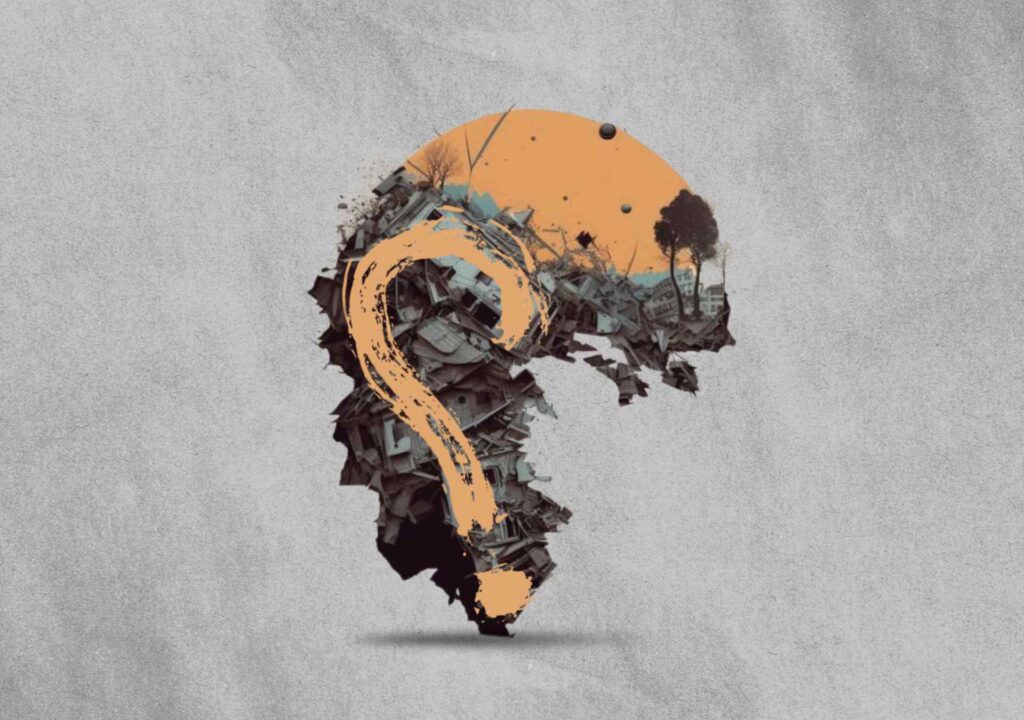
"Sometimes, the end of states does not begin at the borders, but from within society itself."
— Haithem
How Do States Erode from Within and Collapse?
States collapse when their foundational idea is defeated — when they lose the ability to preserve people’s sense that they belong to one nation, despite their political, religious, or social differences. The existence of institutions alone is not enough to keep a state stable if the relationship between the components of society is built on suspicion and mutual hostility.
The collapse of a state does not necessarily begin with an external enemy. History offers many examples of countries whose crises began internally before escalating further. In Yugoslavia, for example, the collapse did not begin with war itself, but when nationalist rhetoric and divisions between social groups intensified, and the idea of a unifying identity gradually gave way to narrower identities. Over time, political and social fragmentation turned into open conflict that ultimately destroyed the existing structure of the state.
This kind of erosion usually begins when society divides into opposing camps, with each side viewing the other as a danger or threat rather than as a partner in the same homeland. Political or ideological differences then become standards by which people are judged, and society begins to sort itself into categories such as “loyalists” and “opponents,” or into groups granted greater legitimacy than others in belonging, expression, and participation.
The problem deepens when these divisions become connected to power or state institutions, because this directly affects the nature of everyday relationships between citizens. Instead of people feeling that the law and institutions represent everyone equally, distrust begins to spread throughout society, and fear or caution becomes what regulates relationships between individuals and communities.
As this reality continues, the idea of national partnership gradually weakens. Citizens no longer see one another as partners in a shared fate, but as political, social, or ideological adversaries. At this point, the effects of division extend beyond politics into everyday language, media discourse, social relations, and even the way events themselves are interpreted and understood.
Lebanon experienced a similar pattern during its civil war, when political and sectarian divisions evolved into a broader social condition that shaped daily life and relationships between people, with consequences that continued for many years even after the war ended.
What makes this kind of crisis especially dangerous is that it happens gradually. It often begins with rhetoric of accusation and exclusion, then slowly develops into deeper social fragmentation that becomes increasingly difficult to overcome. Once a society reaches a stage where internal conflict begins to appear normal or justified to some groups, the very idea of a shared state has already suffered profound damage.
For this reason, the stability of states is not tied only to military or political power, but to their ability to preserve a minimum level of trust among their citizens, and to maintain the idea of the homeland as a shared space broad enough for everyone — not a permanent arena of division between opposing groups.