
The Paradox of Modern Freedom
In societies that promote the slogan of personal freedom, individuals appear to have greater capacity to choose their lives, express themselves, and shape their futures. Yet behind this expansion of options, a subtle sense of pressure, anxiety, and increasing obligations emerges. The more freedom expands, the greater the responsibility of choice becomes, and the more complex the relationship grows between what the individual truly wants and what society indirectly imposes.
Personal freedom is widely regarded as one of the most important human achievements of the modern era. It represents the right to make decisions, express oneself, and pursue aspirations without direct interference from others. However, a clear paradox emerges in societies that grant individuals broad freedom: many people in such contexts experience greater pressure and more invisible constraints in their daily lives.
One of the main reasons for this contradiction is that expanded freedom comes with significant responsibility. In the past, individual decisions were somewhat limited by traditions, social customs, and the nature of communal life, and the range of available choices was narrower. Today, however, individuals are required to continuously make decisions regarding their professional, social, financial, and emotional lives, within a vast number of possibilities created by technological development and modern openness.
This expansion of choices does not always bring comfort; instead, it can turn into a psychological burden known as “choice overload,” where individuals feel exhausted by the constant need to make the best possible decision.
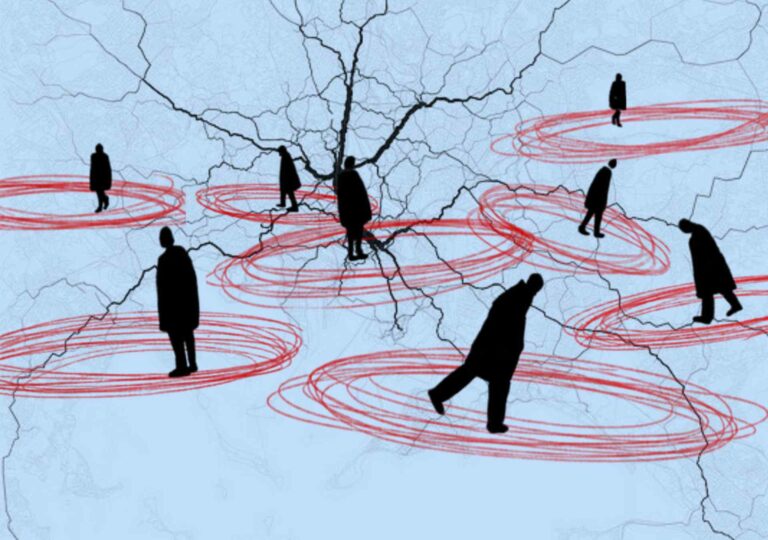
In addition, unspoken social standards play a major role in reinforcing this sense of constraint. Despite frequent discourse on individual freedom, societies still impose implicit expectations related to success, appearance, behavior, and lifestyle. Many individuals attempt to conform to these idealized images out of fear of rejection or social marginalization, making freedom appear as a space governed by invisible pressures.
Another dimension of this paradox lies in the internal tension between the desire for freedom and the need for security and belonging. Human beings are not only seeking independence but also require acceptance and stability within the societies they live in. Therefore, absolute freedom may generate uncertainty, especially when clear social or economic safety nets are absent, turning freedom itself into a source of ongoing anxiety and pressure.
Social media has further deepened this feeling, as individuals live amid daily comparisons with seemingly perfect and complete lives. With repeated exposure to such comparisons, the sense of freedom transforms into a psychological burden, as people become fully responsible for their success or failure while constantly measuring their lives against unrealistic standards.
Nevertheless, this psychological burden can be reduced through steps that help create a more balanced relationship with personal freedom.
This begins with awareness of one’s choices and an understanding that freedom is tied to responsibility, and that making realistic and well-considered decisions reduces the pressure caused by excessive options. Prioritizing also helps individuals focus on what truly matters instead of becoming overwhelmed by attempting to do everything at once.
Managing social comparison is another essential step in maintaining psychological balance, by focusing on personal goals rather than measuring self-worth against what others display on digital platforms.
It is also important to strengthen what can be called “inner freedom,” meaning the acceptance of one’s own choices and the reduction of psychological constraints created by fear of social judgment or expectations.
In conclusion, personal freedom is a far more complex concept than the mere absence of laws or direct restrictions. It is a delicate relationship between individual rights and psychological and social responsibilities, and between the desire for independence and the need for security. This is perhaps why individuals do not always feel fully liberated within free societies, as freedom itself requires continuous awareness of how to manage surrounding choices and pressures.