My Friend, the Number Zero
This narrative emerges from a meditation on “zero” — not as a mathematical digit, but as a human and social condition that embodies both emptiness and beginning at once. Zero, despite its meaning as nothingness, carries within its essence the possibility of starting again. This is precisely what many Syrians experience upon returning to a homeland whose future is absent, and whose past has been eroded.
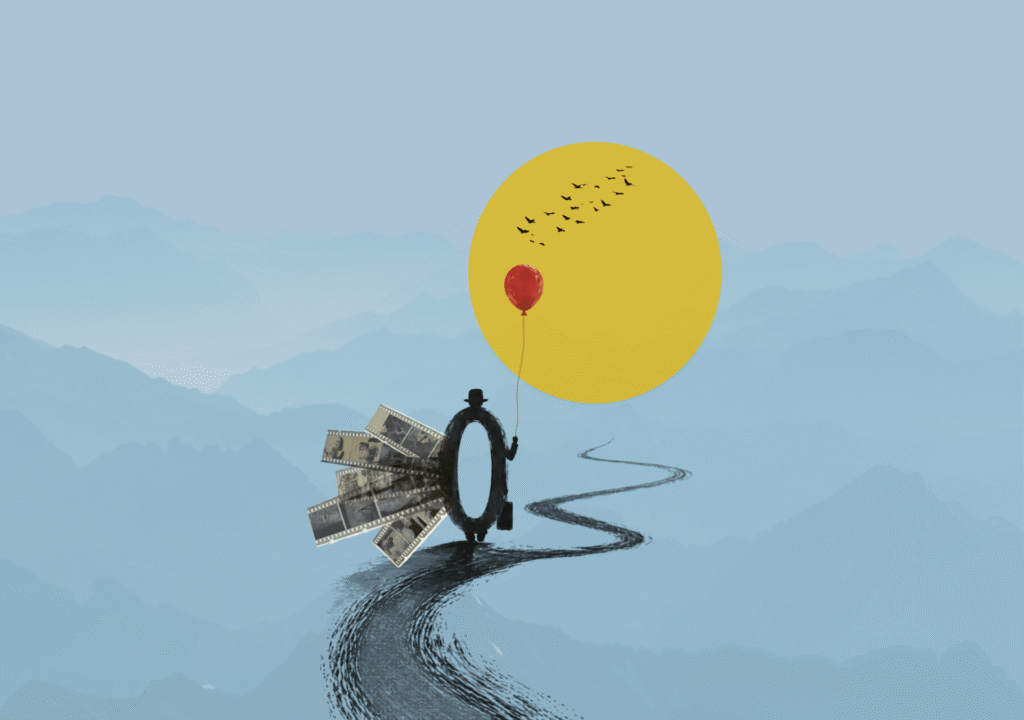
Returnees to Syria do not return to themselves.
— Yassin Al-Maslakh
Syrians, as a rule, write about what they wish from this geography they call a homeland — a long list of postponed desires: freedom, coexistence, justice for those whose rights were stripped away, and genuine efforts to rise from the ruins of everything that has collapsed.
Many Syrians return carrying within them a desire for a new beginning with the country they were once forced to leave.
Last night, we were a group of people who had lived outside the country for long periods. We sat together, trying to share what remained of our stories — or what had begun to form of them upon our return.
It did not take long before the phrase emerged — one that expands in meaning even as it shortens in words, and one that everyone understands instinctively: “It feels like I’m starting from zero.”.
Here, zero is no longer a number. It is no longer a symbol of absence or void.
It has become a human and social condition — part of the collective memory of Syrians, a memory that may differ in detail from one person to another, but shares a deeper core: a quiet, persistent insistence on rising again.
A beginning called “zero” — even if one believes they have already walked a long road through years of exile.
Perhaps this relationship with zero began in 2011, with the start of the popular uprising against a system of entrenched authoritarianism.
From that “beginning,” everything seemed open to redefinition. There was a collective desire to start from zero together — to search again for meaning: the meaning of life, the meaning of homeland, and the meaning of being human in this place.
As the path unfolded, the country became burdened by war, by chaos, and by millions of fragmented stories carried into exile.
Exile was never a familiar choice for Syrians. I remember clearly when the idea of leaving was not part of everyday life. Today, it has become a near-universal experience for those who hold this identity.
Returnees to Syria do not return to themselves.
In exile, we learned how to reconstruct ourselves — how to present versions of ourselves that could survive in new societies. But what no one told us is that return is not recovery.
It is another beginning — more complex, more fragile.
The family you left behind is no longer the same. And you are no longer the same person either.
You sit among them and realize you must begin again: create new memories, build a shared language, reconstruct yourself from a tired and fragile memory.
And so you understand, in some quiet way, that you are starting from zero — trying to re-enter a life you once believed was already yours.
It does not stop with family. Even with friends, you find yourself explaining again: What has changed in you? What no longer feels familiar? What do you need now to feel okay? As though you are redefining yourself repeatedly, in a language you never fully mastered.
And so the sentence keeps returning, in different places, on different tongues: “It feels like I’m starting from zero.”It is not a complaint so much as it is an admission — an acknowledgment that something has changed us, that what we will become has not yet taken shape, and that despite everything, we are still learning how to endure.
For this reason, zero seems to have become a quiet companion in Syrian life: in revolution, in departure, in survival, and in return.
Always, there is a beginning imposed upon us — or chosen by us — only for us to discover that we are standing once again at the same point.